
French Leave
Harriet gets out of Paris before things start hopping!

As much as I love Paris, there are times when the weather is depressing, the news is depressing, French politics are depressing and it’s time to split.
And that is exactly what I did in mid-October when my better half invited me to spend a week in Sicily to pre-celebrate my upcoming birthday in early November. Which birthday? Suffice it to say a big one!
The Club Med in Cefalù on Sicily’s northern coast was just the ticket. We feasted on tasty Sicilian specialties and soaked up both the sun and rich cultural offerings such as the Baroque style Church of the Gesù in Palermo. (panel of and ceiling in pictures below)
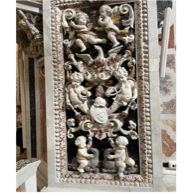
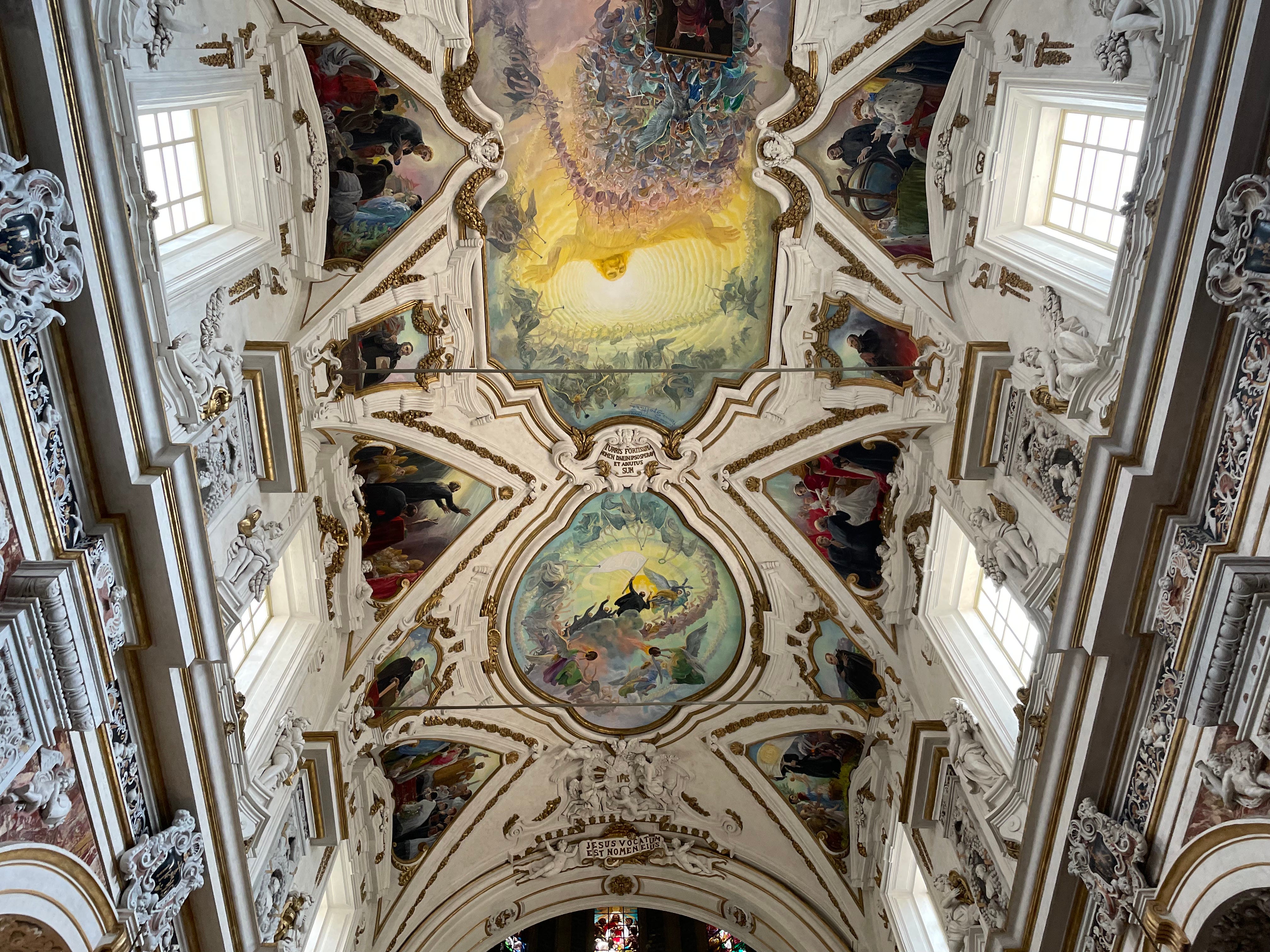
And all too soon it was over! We boarded our plane, vowing we would return to that fascinating island as soon as we can.
We had stayed away from the television and “current events” but knew that couldn’t last.
And it didn’t. Two sensational events whipped us back to reality in no time at all.
A day after our return, we were watching the news to catch up on what was happening and found ourselves staring at the images of two thieves carrying out a jewel heist (eight crown jewels in the galerie d’Apollon of the Louvre valued at 80 million euros but which in fact are so valuable that they are inestimable).
Not only that, but they operated in broad daylight just as the museum was opening. If that wasn't made for television, I don’t know what is. (I imagine that Netflix scriptwriters are already busily scribbling away.) Since then, French news has been almost exclusively about the heist. Who did it? Who ordered it up? Have the jewels been found? And if so, intact? Did the alarms go off and if not, why? The questions swirled.
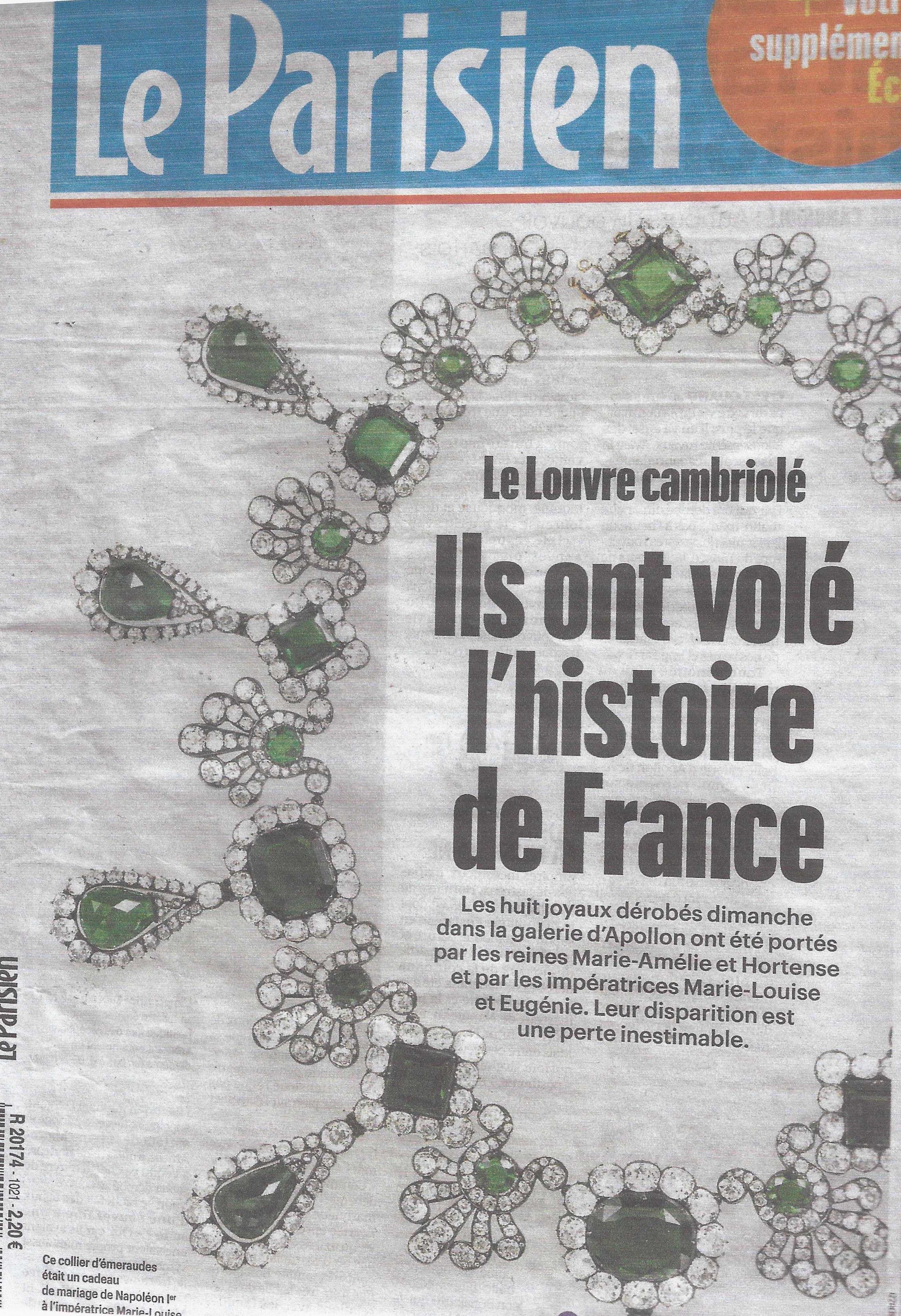
Le Parisien, a daily newspaper whose beat, as it indicates, is Paris, obtained a minute by minute timetable of the break-in from a camera installed in one of the wings of the galerie where the jewels were located. I paraphrase their account below:
9:34: Two thieves, who have climbed from a freight lift to the balcony of the Gallery Apollon on the quai de la Seine, break the window.
9:35: They enter the gallery, take out the power tools and get to work on the respective cases. The glass doesn’t crack. One of the robbers reaches into his parka to get some tools. During this time the commissariat of the 1er arrondissement receives a call saying there is an ongoing robbery.
9:36: An agent at the command post presses on a button that links the museum to the Ministry of the Interior. Museum guards have instructions to protect the visitors. In spite of that, in spite of two museum agents make an advance toward the intruders but step back undoubtedly fearing that they are armed.
9:37: The thieves could care less about the museum guards behind them. The one with the yellow vest manages to pierce the glass case with his power tool, get his hand inside, grab the jewels and put them into his sack. His accomplice, working on another display case, finally manages to make a narrow opening to get a few objects.
9:39: Until now they have taken their time but suddenly speed up. In their haste to leave, one man drops some of the jewels on the floor and picks them up. Less than five minutes after breaking in, they exit through the same windows they entered.
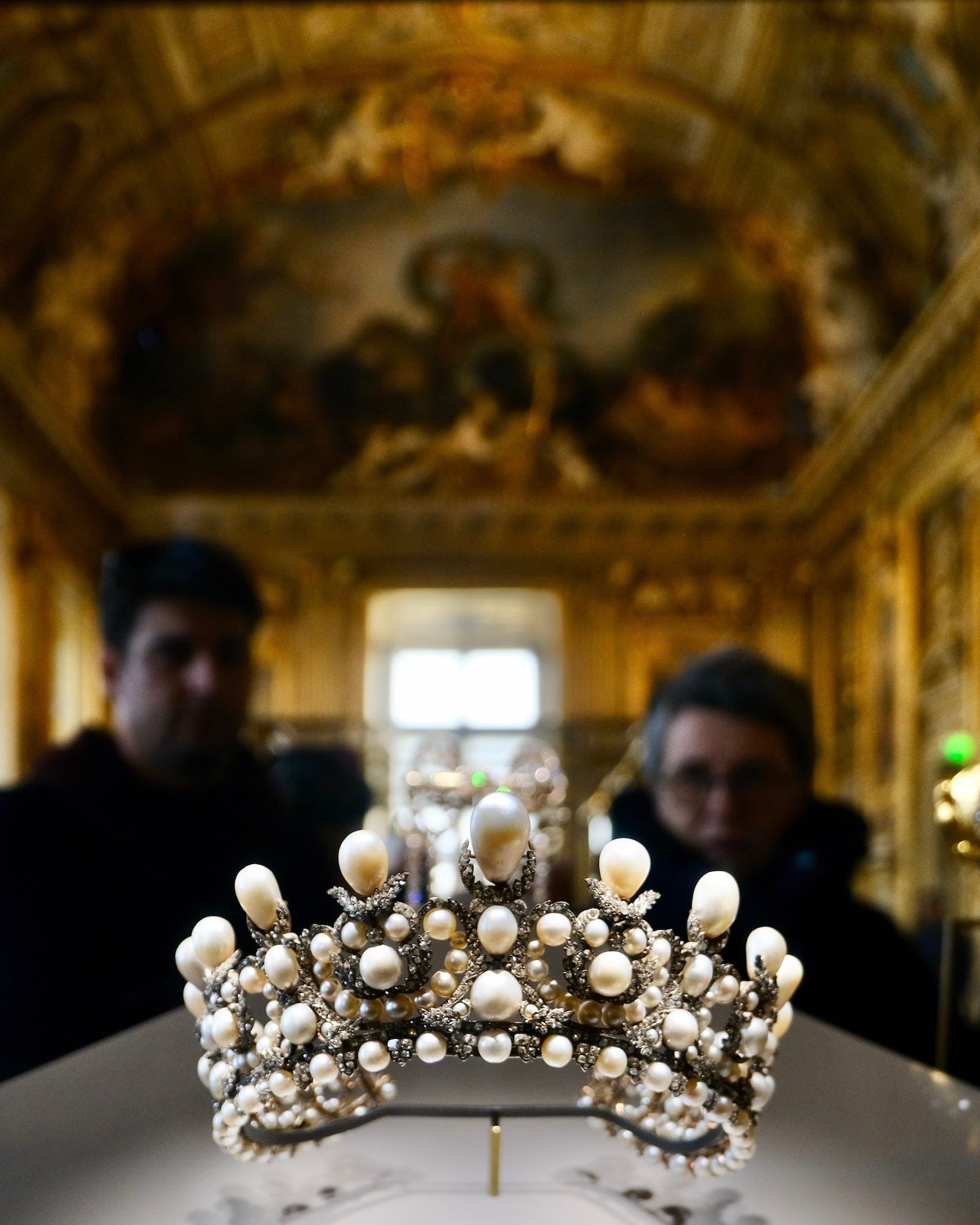
The diadem of the Emperess Eugénie
Fortunately for investigators, the thieves left their DNA in several places. One of the two was stopped in the nick of time as he was boarding a flight to Algeria. Later, his accomplice, a Malian, was picked up. Both are now facing a long prison sentence. In the meantime, police were actively searching for others involved and have rounded up 5 other suspects for a total of seven.
The Reaction
The initial reaction was shock, the same shock as when Notre Dame went up in flames in April 2019. I remember that day well. We were sitting with friends in a restaurant not far from the Cathedral when suddenly a hush fell over the room and the restaurant emptied. As we drove home on a bridge to the east of the Cathedral, we were stunned by the vision of bright yellow flames shooting toward the sky.
The shock was two-fold: first of all, that there was a fire of that magnitude, secondly, that the walls of the 800 year old edifice might simply disintegrate and be no more.
We know the end of the story. After five years of painstaking and careful restoration, the Cathedral stands, more beautiful than ever.
The reaction to the Louvre was the same: utter shock. But also, shame.
How could a world-renowned museum containing jewels of inestimable value not protect its treasure? Why put jewels of that historical and monetary value next to a window in the first place? Who was responsible? Louvre President Laurence des Cars immediately offered her resignation to the Minister of Culture but it was not accepted. Des Cars had notably pointed out faulty security that went largely unheeded. President Macron had drawn up an extensive plan for the renovation of the entire museum.
But the thieves got there first.
Lost History
You can’t bring back history when it’s lost. One editorialist wrote that “what was stolen was our common culture, a culture that can be broken, taken apart and melted away.”
The American coverage, or at least what I read, was slightly different: “I am not sad when the jewels of a crass conqueror go missing,” one columnist wrote.
That person missed the point. Or perhaps I have lived in France so long that I see that history, whether “good” or “bad”, as a national treasure to be preserved for future generations.
The French, who can hardly agree on anything, would agree on this, I am sure.
A President in Prison
Only two days after the Louvre heist, Nicolas Sarkozy, former President of France, was convicted of criminal conspiracy (association des malfaiteurs) for allegedly accepting bribes from Libyan President Gaddafi for his 2007 presidential campaign. He was cleared of all other charges but the judgment required exécution immédiate, a punishment generally used for drug dealers or anyone considered a flight risk, neither of which applies to the former Preisdent. Those on the right side of the political spectrum found the verdict unfair, claiming there was no evidence to support the charges and no reason to throw him in jail so hastily. Those on the Left and those who hate Sarkozy (that makes a lot of people) celebrated the victory.
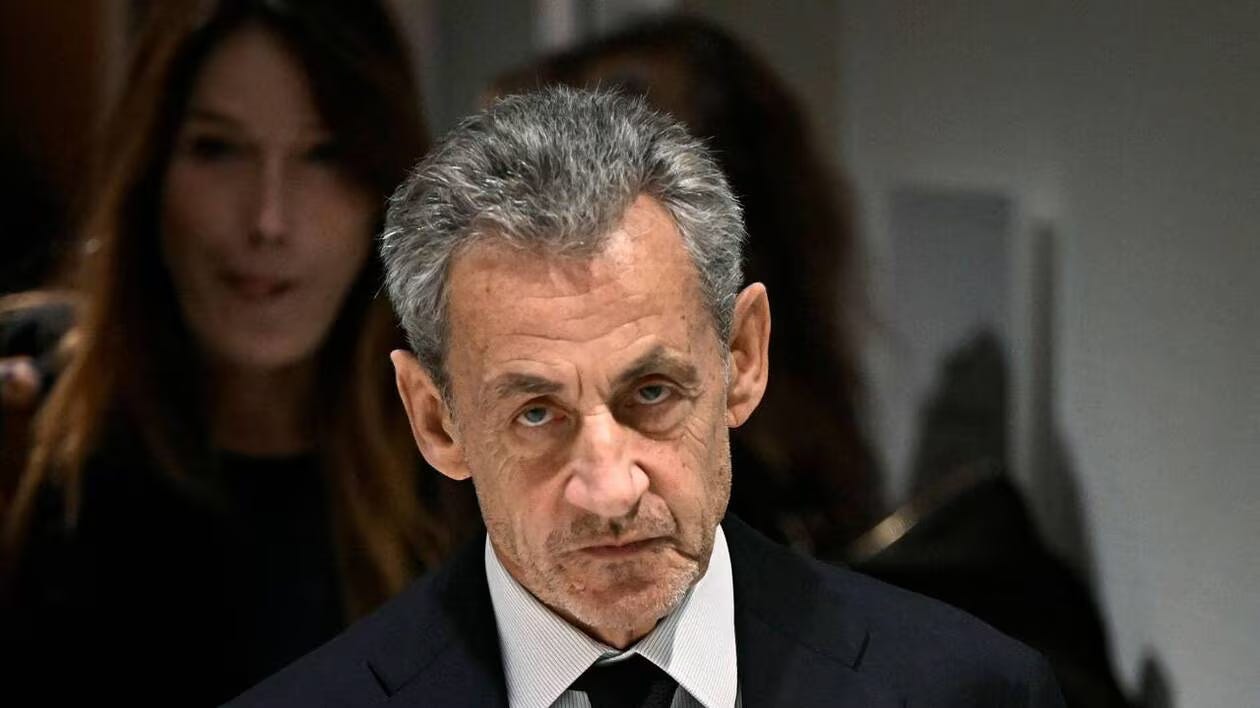
I’m not a big Sarkozy fan but I sided with those who felt the former President was treated unfairly. Sarkozy is indeed the Man You Love to Hate -vulgar, bling bling, impestuous,with a sly and shady look– but no evidence was found to incriminate him of criminal association.
I met Sarkozy when we lived in the upscale suburb of Neuilly where he was the Mayor - and a good one at that. Yet, my first reaction was …repulsion! The needle of my judgment moved from passionate dislike to neutral after I had met with him privately in his Mayoral office. That came about when an American English teacher friend who also lived in Neuilly invited me to their private class. The idea was that I would present my book French Toast to Monsieur le Maire and we would discuss it in English (although she warned me this his English was atrocious). He arrived late and energetically, bidding us to enter his office where, once seated, he offered us candy from a big bowl on his desk. We talked about everything else but my book – and in French. I remember thinking that he was quirky –but that in person he looked more like a human being and less like the monster I thought.
Later, Philippe and I attended an award ceremony at the mairie where Sarkozy pinned a medaille de travail on his vest (Philippe got an extra month of salary for the award but has since lost the medal) and often saw Sarkozy in his role of Mayor.
Then in May 1993 a man named Erick Schmitt, who called himself The Human Bomb, took an entire class of kindergartners hostage in the very school our children had attended. I declined to report on the story for People magazine because I felt too close to the subject. But I was watching events unfold of course.
As Mayor and newly appointed Minister of Budget, Sarkozy could have sat on the sidelines. Instead, he insisted on being part of the negotiations and finally, escorted by police, he entered the classroom, got the confidence of the hostage taker and managed to bring out several children.
Depending on their political bent, people saw him as a hero or as a guy who would do anything to get the spotlight on him. I’m no fan but must admit that in that situation I found his actions courageous. Voilà!
So now we’ve got Sarkozy in jail as well as seven suspects in the Louvre heist. Not a bad catch.
Will the jewels be found? On verra.
In the meantime, stay tuned to harrietinparis for more about what’s going on in France and, as always, thanks for taking the time to read my thoughts!
Harriet’s books can be found at https://www.amazon.com/stores/Harriet-Welty-Rochefort/author/B001IR3CPE?ref=ap_rdr&isDramIntegrated=true&shoppingPortalEnabled=true
This is better coverage than The New York Times.... Thanks, Harriet. And who knew Sarko could be a hero? I guess the law of averages means he has to do something right and good some of the time. After all, Hitler did love his dogs.
Harriet, it’s always a pleasure to read your words. I really enjoyed the Sarko saga!